H O M E


THE BALANCE SADDLE


Source:  Balance Saddle International

The Balance Saddle takes an innovative approach to saddlery.  Carol Brett, a Freelance riding instructor and Dressage judge in England was beginning to recognize that many of the horses that she was seeing were having their movement and comfort seriously compromised by the saddles they were wearing.  Carol joined forces with Lesley Ann Taylor and Maureen Bartlett to form the BALANCE organization; she had their support and encouragement to continue her investigations.

When the founders of the BALANCE organization started studying the impact that saddles have on the horse they soon realized that along with the impact that riding itself can have, the effect of a saddle that interferes with the natural range of equine movement has alarmingly far reaching consequences. An increasing number of Veterinarians, Physiotherapists, Chiropractors, Osteopaths etc. etc. are becoming aware of how often they get called in to identify and treat damage that is related, directly or indirectly, to the saddle.

The BALANCE organization single handedly changed the saddle design and fabrication industry.  The original Soft Options™ Balance saddle uses a rather different approach to saddle design in so much as it combines the use of a rigid framework (tree) in the front half of the saddle only, to create clearance over the horse's spineous processes and the ligaments in this area. This is important because it is in the front of the saddle that the stirrup bars and girth attachments are located and can, therefore, exert unacceptable pressures. The back of the saddle however, is designed to allow a fully flexible and 'soft' feel for both horse and rider.

The saddles have full depth panels to create a proper, wide gullet and the panels are made of a layered felt/foam construction, which provides a smooth and cushioned feel for the horse. The seats are very generously padded, which creates super comfort for the rider as well.

Saddle Fit & Anatomical Changes

It used to be the case that a saddle was purchased based upon the buyer's preferences for him or herself.  Perhaps you thought you would look nice in that extremely expensive (and beautiful) Butet, or that dressage saddle endorsed by Anky van Grunsven.  Those would be great choices if they fit your horse; and have the ability to be modified as your horse's anatomy changes.

Below is an example of how much a horse can change and also demonstrates how inappropriate custom saddle fitting can be if only based on matching the saddle to the way the horse looks on the day of the measuring/fitting!
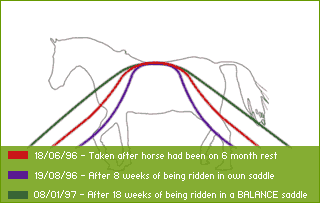
The diagram shows the recovery of muscle mass once this particular horse was relieved of his old saddle and ridden in the BALANCE Saddling System. This horse had to wait till he was 20yrs old before getting his BALANCE Saddle and having his first taste of being ridden free of the discomfort and restriction he had come to associate with the act of riding. Provided the horse is supported by a healthy environment, good recovery is totally possible in older horses and BALANCE have helped many in their late teens and early 20's, the oldest so far being 35yrs old!

Because so many horses have saddle related muscle wastage, or under-development, this horse's problems were not recognised for most of his life. He was simply described as having "high, narrow withers" as if it were part of his conformation. When you look at the green profile which is his healthy, well muscled shape, one could hardly describe this as "narrow" and his withers were well covered and 'hidden' by strong, healthy muscle, as they always should have been. No one in their right mind would suggest using a narrow fit tree on him, but at the point where the owner contacted BALANCE (when her horse's back matched the blue profile), her own saddle fitter had just suggested that he try to make her narrow fit saddle a bit narrower still because is was sitting too low on his "high, narrow withers"!

Remedial Program

The idea is to assess, identify and remove, where possible, any sources of stress or discomfort in the horse's environment. Some examples are:

  • a restrictive/uncomfortable saddle

  • a demanding competition schedule

  • training/riding methods that do not respect equine bio-mechanics

  • discomfort in the feet due to poor hoof care or farriery

  • unnatural postures in the horse created by past lifestyle i.e. pelvic misalignment, muscular spasms (outside professional help usually required to deal with such issues)

  • lack of provision for regular access to pasture, or at least, some turnout

  • lack of proper nutrition

  • discomfort in the mouth due to sharp/misaligned teeth

By taking an honest and objective look at the way your horse is living, it is sometimes possible to make some simple changes that will make a big difference to the quality of his life and more potential for success. Certainly, it makes sense to remove as many obstacles as possible on your horses road to full recovery and towards his (and your) full potential.

It often makes sense to set aside at least one month, and if your horse has a lot of muscle wastage to extend this time frame in order to give your horse the best chance of recovery. Although this might seem like a long time, it is still, in our experience the quickest way to get your horse into good shape.

Remember the suggested 'exercises' listed in the Remedial Program are not to make the horse work hard. It is more about paying attention to the quality of the movement the horse can give, rather than quantity. Having said this, owners are often amazed at how fit their horses can be after a month or two on this program because the horse is using his body in an efficient way.

Leading the horse in hand

Just taking your horse for a walk every day for 15/20 minutes can be very beneficial. Divide the time you spend equally between leading from the off side and the near side (make sure you are in a safe place to do this) Encourage a good positive walk, but try not to influence the head and neck position of the horse other than to keep it laterally straight. It is the relaxed, rhythmic use of the horse's whole body that helps the horse to recover.

Lungeing

Where at all possible, use no equipment other than a lunge cavesson or comfortable headcollar, comfortable boots or Polo wraps if necessary, together with your lunge line and whip (no saddle, rollers, side reins or gadgets). The idea is to get the horse to walk and trot on as large an area as you can manage (you may need to walk around with the horse rather than standing rooted to the spot). The walk needs to be rhythmic and unhurried. Be sure that you don't bustle the horse along as he needs time to put each foot down separately in the natural four beat sequence. The head and neck position should not initially be interfered with by you, rather, observe the place/s that the horse wants to carry his head and neck and notice how this complements what the horse is doing with his body. Also, notice that the speed of the horse in each pace has a significant influence on how much he can 'let go' of tension throughout his body and this is often most easily spotted in the trot. You may need to allow or encourage your horse to walk/trot quite slowly in order to find the speed that allows the fullest range of movement through all the joints in the limbs, encourages the horse to experiment with his head/neck position, and be soft and relaxed through his body. What you are trying to achieve now is a 'therapeutic trot' with a degree of elasticity and ease.

Loose Schooling

If you have the facilities to loose school you may want to use this option as part of your remedial program. Follow the same principles as in the section on Lungeing. The speed of the trot and walk must be such as to encourage the horse to be soft, elastic and rhythmic in the use of his body. The work must be done for an equal time in each direction. Remember to keep the sessions short so that you stop before the horse gets tired.


Bareback Riding

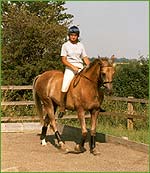
This rider is literally riding bareback but the use of a thick pad and a stretchy surcingle can make things more comfortable for horse and rider when done as part of the Remedial Program.


It may have been suggested that you consider this option. For some of you the idea of riding without a saddle will be fun, for others it will fill you with terror! Do not ride your horse bareback if you do not feel confident. However, if you have the facilities and the desire to have a go, even if only at walk, you will probably discover how wonderful it can be. Always wear the correct headgear, have a neck strap around the horse's neck and, if you feel more secure, wear a body protector. The use of a thick saddle pad and/or a gel pad and a stretchy surcingle protects you and your horse from each other's bony bits!

There are some occasions when we would suggest you do not ride bareback. These are:
 

  1. During the first 10 days of your programme.
    There may well be deep bruising in the saddle area of the horse's body which needs a little time to heal. It is better to have no pressure in this area during this time.


  2. If the horse has a pronounced hollow/sway backed posture.
    If the horse has, for some reason, habitually contracted its back muscles to create a dip or hollow in the centre of the back, riding with no saddle can concentrate your weight in a small area at the base of this dip. In many cases, the other remedial work will start to change this pattern within a few weeks, at which point you may want to start sitting on the horse for a few minutes only, preferably on top of something soft and cushioned (e.g. a thick 'Puffy' or fleece pad or a gel pad) to see how the horse copes. Remember if you do so much 'work' that the horse begins to tire, he will fall back into old undesirable patterns. So, keep it 'short and sweet'!


  3. Out on the Public Highway.
    Although you may feel quite safe riding bareback, it is quite possible that should you be in an accident you will not be covered by insurance, if you are not using a saddle.

The benefits of occasionally riding with no saddle can be significant. With nothing solid between you and the horse, you will be able to really feel how much is going on in the area you are sitting on. You will be able to get an idea of how the horse can move when unrestricted. For example, you may find that the horse offers you a longer stride. The horse may be more willing to move than usual. Remember to follow the same 'rules' of keeping the horse as straight and even in his/her body as possible. It is obviously easier to do this when riding in a straight line! For this reason, do not get stuck on 20 metre circles in the school. Make more use of the long sides and diagonals. Do not use your reins to fix the horse's head/neck. Instead, give your horse an even, elastic feel down both reins all the time and allow the horse to experiment with his head/neck position while you keep giving the same feel down the reins. You will need to have a good range of movement in your arms, shoulders and upper body to achieve this, because many horses like to stretch right down with their necks for a while. We call this action 'Hoovering the ground'.

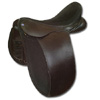
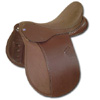
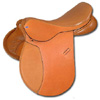
Balance has several new lines of saddles:


Zenith Dressage                GP Dressage                 Balance Jumping          GP Jumping

All have in common:

  • BALANCE Saddles are built on a variety of specially designed trees.
  • They are relatively flat in the seat to avoid restricting the rider.
  • They have 3 widely spaced girth straps (billets), each on separate webs, to give a good distribution of pressure along the length of the tree. This arrangement also helps to accommodate different girthing positions needed by certain horses.
  • The panels create a generous bearing surface and a springy, well cushioned feel for the horse.
  • ALL BALANCE saddles have a generous gullet (channel) to protect the horse and allow for natural, healthy movement.
  • ALL BALANCE saddles have adjustable/removable knee blocks.


Carol Brett comes to the United States at least once per year for demonstrations and fitting sessions.  Details are on the Balance site.  If you haven't tried a Balance saddle, you don't know what you are missing!